
Representing the next generation of legal voices
Theodyx expands its digital representation practice to law students, lawyers, scholars, and professionals.
↓“A career and the presentation of it can no longer be pulled apart. The career used to come first and the digital presence followed. Today it’s the inverse: people have a record and a portfolio long before they have a career, and they should use it to their advantage.”
Grant Sikes, Managing Partner, Theodyx
Where reputations are built now
Some of the most influential people in any society are its scholars — the lawyers, academics, and professionals who spend years mastering a discipline and then translate it for everyone else. What has changed is not who they are but where they live. A generation ago, a rising professional's reputation was built in rooms: courtrooms, conference rooms, and the pages of a journal almost no one outside the field would ever read. Today it is built in all of those places and on a phone screen, in public, in real time. Career and presentation have become inseparable.
That is the shift Theodyx exists to help our clients navigate. We are a media and technology company for the creator economy, and today we are formally expanding our practice to represent law students, lawyers, scholars, and professionals in digital media. We are deepening that work because the people who carry the most hard-won expertise are precisely the people the internet now rewards for sharing it — if they can do it credibly, consistently, and in a way that is true to who they are. Our job is to help each of them express what only they can.
To be clear about what that means: Theodyx is not a law firm, and we do not provide legal advice or legal services. When we speak of "legal representation in media," we mean that we represent legal professionals — and the students becoming them — as creators and public voices. We help shape careers alongside the public presentation of those careers. The lawyers and law students we work with remain fully responsible for their own professional-conduct obligations. Our expertise is the digital landscape they now operate in.

Why we are expanding now
The audience for expertise has never been larger, and it is increasingly a professional audience. LinkedIn reached 1.3 billion members as of the quarter ended March 31, 2026, making it the largest professional network ever built.
The law itself is drawing a historic wave of new entrants. Law School Admission Council data showed more than 82,000 people had applied to ABA-approved law schools for the 2026 enrollment year as of late August 2026 — roughly 8% above the 2025 cycle, which had itself risen about 18%, and the largest applicant pool since the Great Recession. Schools have expanded to meet it: ABA-approved law schools enrolled 42,817 first-year J.D. students in fall 2025, an increase of 7.9% year over year, and total law school enrollment rose 4.4% to 145,116.
Those two facts — a booming professional-content platform and a surging pipeline of new legal talent — point to the same conclusion. There has never been a larger cohort of ambitious, expert, early-career professionals who need to establish a public voice, and there has never been a bigger or more receptive audience for them. We are expanding because that is where the need is, and because we believe representation done well turns a scattered personal-brand experiment into a durable career asset, one whose effects reach well beyond a single career. We are proud to lead that work.
Why the most influential voices are scholars
There is hard evidence that expertise, shared well, moves outcomes. In the 2025 Edelman–LinkedIn B2B Thought Leadership Impact Report, 95% of the internal decision-makers Edelman calls "hidden buyers" said that strong thought leadership makes them more receptive to sales and marketing outreach, and 79% said they were more likely to advocate for a vendor's proposal during a formal selection process if that vendor consistently produces high-quality thought leadership. Perhaps most striking for anyone earlier in a career: 53% of decision-makers agreed that when thought leadership is high quality, brand recognition matters less. In other words, a sharp idea from a lesser-known voice can outweigh an established name.
This is why scholars — people whose entire training is the disciplined production of credible ideas — are so well positioned for the current media environment. LinkedIn's own data shows thought-leadership content earns a 1.7 times higher click-through rate and a 1.6 times higher engagement rate than other posts on the platform. The raw material of influence today is exactly what a legal education produces: the ability to take something complex and make it clear, useful, and trustworthy. Helping the people who carry that expertise navigate the digital world is our work.

“Thought leadership is no longer something you earn the right to after decades of practice. It begins before the license.”
Navigating the digital legal world
The digital legal world is not a neutral space, and this is where representation earns its keep.
Four realities make it hard to navigate alone.
i. Platform dynamics
Reach is volatile and format-dependent. Video uploads on LinkedIn grew about 36% year over year heading into 2026, yet the platform's algorithm subsequently pulled back video reach. Document and carousel posts, meanwhile, generated roughly 39% more reach than the average post. What "works" shifts constantly across LinkedIn, TikTok, YouTube, and Instagram, and a professional with a demanding day job cannot be expected to track it. We do that so our clients can focus on substance.
ii. The credibility and authenticity premium
Audiences, and especially the youngest professional audiences, reward the real over the polished. According to Deloitte's 2025 Digital Media Trends research, 56% of Gen Z say social media content is more relevant to them than traditional media, and 52% feel a closer connection to social creators than to television personalities. Credibility, not gloss, is the currency. That favors professionals who can show real expertise and a real person behind it.
iii. Advertising rules and professional conduct
Lawyers operate under professional-conduct rules that most creators never think about. ABA Model Rule 7.1 prohibits false or misleading communications about a lawyer's services, and Model Rules 7.2 and 7.3 govern advertising and solicitation across "any media," social platforms included. We are not the compliance authority — attorneys and law students remain responsible for their own obligations under their state's rules — but we build public-facing strategies with those realities in mind, rather than pretending they do not exist. That is a meaningful difference between general talent representation and representation built specifically for legal professionals.
iv. Monetizing without eroding trust
Professionals increasingly monetize expertise directly, and doing so without eroding credibility or crossing an ethical line requires care. Representation helps a client build brand partnerships and revenue streams that fit both the audience's trust and the professional's obligations.


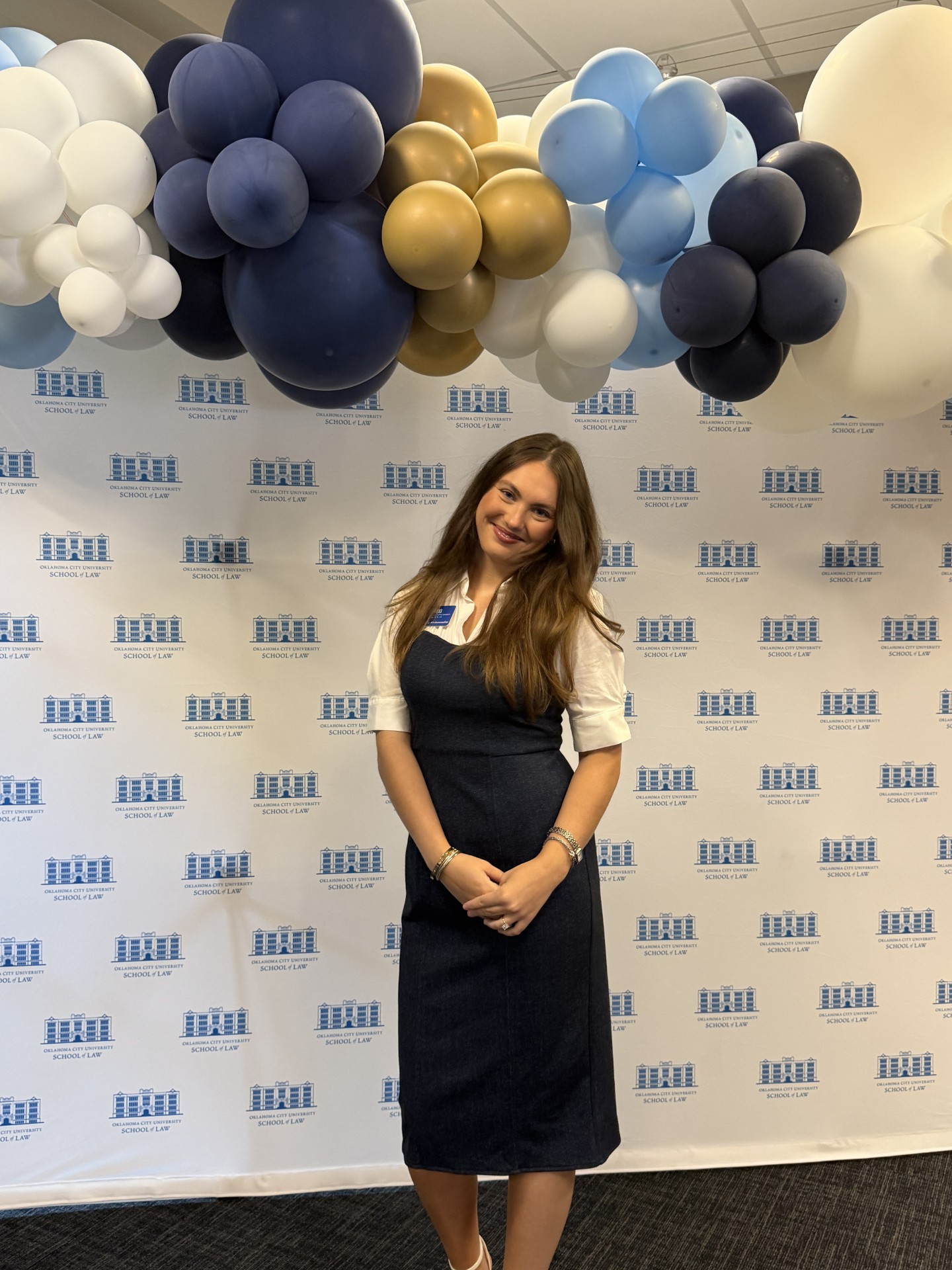
The human side of thought leadership: Mia Paladini
The most durable professional influence rarely comes from a highlight reel. It comes from showing the real journey. The studying, the stress, the process, the mentorship. That is the belief at the center of how we work. Our client Mia Paladini is a clear illustration of it.
Mia is a law student, a 3L as of September 2026, whose best-performing work is practical, first-person law-school content: how she prepared to apply, what she wishes she had known before 1L, the essentials she actually uses, the honest texture of cold calls and exam season. It is not advice dressed up as performance; it is one person narrating a hard, meaningful path while she is still on it. That is precisely the kind of content the data says audiences trust, and it demonstrates something we believe deeply: thought leadership is no longer something you earn the right to after decades of practice. It begins before the license.
A closer look at the work
It is worth being specific about what that looks like, because authenticity is an easy word and a difficult practice. Three of Mia's videos show the range of it.
The inventory: what you actually need
In one, she walks through what a law student actually needs — not the aspirational list, the working one. Flashcards. The specific pens she reaches for. A water bottle that does not announce itself in a silent room.
The genre is crowded. Supply hauls are a staple of student content on every platform. What separates hers is that it is an audit of what she genuinely uses, delivered by someone still using it, at the exact moment her audience is deciding. Incoming students arrive at that question with enormous intent and almost no reliable source. The school does not tell them. The people who could are a year or two ahead and busy. Answering it well is a small act of service that happens to reach a large number of people at once.
It is also, not incidentally, the place where brand partnership sits most naturally for a creator like Mia, and precisely why the standard we hold on partnerships matters. A recommendation in that format has value only because the audience believes it is the real list. Protecting that is a commercial decision as much as an ethical one.
The etiquette: the rules nobody writes down
In another, she takes on the unspoken etiquette of law school — the conventions no one publishes and everyone is assumed to already know.
This may be the most valuable category of content she makes, and the least replicable. It is tacit knowledge, the kind that has historically traveled only through proximity: a parent in the profession, an older sibling, a summer in a firm, a mentor who happened to take an interest. Students who arrive with that inheritance start ahead. Students who arrive without it spend a year discovering the rules by breaking them.
Putting it on a public feed does something a written guide rarely manages. It hands the unwritten curriculum to anyone who thinks to look for it. That is mentorship operating at a scale mentorship has never operated at before, and it is a direct answer to the question of who the internet should be rewarding.
The method: notes, outlines, briefs, and the binder
In a third, she takes on the mechanics — how she takes notes, how she builds an outline, how she briefs a case, how her binder is set up, and what she wishes she had understood walking in.
This is the video that travels furthest beyond the law. The artifacts are legal; a case brief is a legal form. But the underlying problem is universal: how do you take an overwhelming volume of complex material and organize it so you can retrieve it and use it under pressure, months later, in a room where you do not get a second attempt? Every graduate student and every junior professional facing their first real information load is solving that same problem, usually alone and usually badly.
The video is also a demonstration of the claim we make earlier in this piece about what legal training produces. Mia is not describing the skill of making complexity usable. She is performing it.
What the three have in common
None of them is a highlight reel, and none of them is advice about the law. They are about how to be a student of it, which is a clean line and an important one — and a line that will matter more, not less, as she moves toward the license.
What connects them is position. Mia is making this work from inside the experience, while the memory of not knowing is still fresh and before the incentive to sell a solution has arrived. That is exactly the asymmetry the research above describes. When the thinking is good enough, the name attached to it matters less, and younger audiences in particular report feeling closer to individual creators than to the institutions that used to hold that trust. A credentialed expert twenty years past the experience can explain law school. They cannot narrate it.
Mia represents a broader movement. She is part of the wave of law students and young lawyers who have made #LawTok one of the most visible professional communities on the internet — a space where, as the Washington State Bar News put it in late 2025, TikTok's use is ubiquitous among law students and junior practitioners alike. A Georgetown Journal of Legal Ethics study coined the term "lawfluencers" for this cohort, describing creators who build a brand on both elite, erudite knowledge and everyday relatability. That combination, expertise plus humanity, is the future of professional thought leadership.
Our work is to treat a body of content like this as what it is: an asset. That means understanding which formats carry which ideas, distributing the same expertise across platforms that reward different things, building the archive into something durable rather than something that scrolls away, and pursuing partnerships that fit the trust already there instead of borrowing against it. The voice is hers. The strategy around it is ours.
How thought leadership in North America is expanding
The center of gravity for professional content is shifting toward formats that reward exactly this kind of substantive, human storytelling. Professional-services firms are diversifying beyond the short blog post into video, podcasts, original research, and digital events, and North America remains the largest market for that content: the region held roughly 48% of the global podcast marketing services market in 2025. Video podcasts in particular have become a mainstream professional format; YouTube confirmed in February 2025 that it has more than 1 billion monthly active viewers of podcast content.
The expansion is not only about more content; it is about a wider set of people producing it. LinkedIn newsletters are now overwhelmingly authored by individuals rather than institutions — 489 of the platform's top 500 newsletters belong to people, not companies. Influence is flowing to individual voices, and that is a structural advantage for the scholars and professionals we represent.
A global legal forum in 2027
Because we believe digital media and professional services now go hand in hand globally, we are planning to host a global legal forum in 2027. The premise is simple: the same convergence that makes a law student's social media relevant to her career also makes real-world networking more valuable, not less. We intend the forum to be built on a few clear pillars — networking, career advancement, the convergence of digital media and professional services, and the bridging of academia and industry. That matters all the more as we extend the network to leaders across Europe and Asia, in both the private and public sectors. Details, including name, location, date, and program, will be announced in due course.
The instinct is grounded in evidence. Business events remain one of the most trusted and effective professional channels: the Events Industry Council and Oxford Economics reported that business events convened 1.65 billion participants globally in 2025 and generated US$1.3 trillion in direct spending. Booking.com Business found that 61% of attendees name networking and collaboration as their primary reason for attending professional events. Digital presence and in-person connection are not competitors. They compound.
Getting back to basics: scholarship as the foundation of the network
For all the talk of algorithms and formats, our expansion is a return to something older than either: scholarship. The disciplined pursuit and sharing of knowledge is the foundation of every credible professional network.
Referrals and reputation still drive professional careers, and they have for a long time. Writing in the ABA's Law Practice Today in 2009, career expert Shelley Canter observed that studies had consistently shown for two decades that at least 70–80% of jobs come through a person's network. Referrals compound the advantage: candidates who apply through a personal referral are roughly four times more likely to land an interview than those applying through a job board, and employee referrals account for about 40% of all hires despite representing a small fraction of applicants. Reputation is built on demonstrated knowledge, and knowledge is what scholars have to offer. Getting "back to basics" means treating expertise, not virality, as the asset we help clients compound.
This is the heart of our mission: to help shape a professional's career alongside the presentation of that career, because the two can no longer be pulled apart. The résumé and the feed are read together now. A prospective employer, client, or collaborator will encounter a professional's public voice before a first meeting, and often instead of one. Representation means treating that public voice as the serious career instrument it has become. Strategy, not vanity. Positioning, not noise.
Your network is your net worth. The research on hiring, referrals, thought leadership, and events all points to the same truth: opportunity travels through relationships, and relationships increasingly begin with a piece of content. Theodyx's platform exists to bridge the two — the network and the net worth — every single day. We are not only a representation practice; we are a growing network, built on the basics that never stopped mattering.
If you are a law student, lawyer, scholar, or professional building a public voice, or wondering whether you should, we would like to talk. Learn more about our representation practice and read more of our thinking at theodyx.com.
Frequently asked questions
What does Theodyx do for law students and professionals?
Theodyx represents legal professionals and law students as talent and creators in digital media. We help with thought-leadership content strategy, personal-brand positioning, platform growth, brand partnerships, and long-term career positioning. We are a media and technology company, not a law firm, and we do not provide legal advice.
Is Theodyx a law firm or a legal services provider?
No. Theodyx is a media and technology company for the creator economy. We help legal professionals build and navigate their public presence. Attorneys and law students remain responsible for their own compliance with applicable professional-conduct rules, including bar advertising rules.
Why should a law student build a personal brand before graduating?
Because audiences and employers increasingly reward demonstrated expertise and authentic storytelling, and because influence compounds over time. A majority of younger audiences find social content more relevant than traditional media and feel a closer connection to individual creators, and professional opportunity overwhelmingly travels through networks and reputation. Starting early, done credibly, builds a career asset.
How does Theodyx help lawyers navigate bar advertising and ethics rules online?
We build public-facing strategies with the realities of professional-conduct rules — such as ABA Model Rules 7.1–7.3 on lawyer communications and advertising — in mind, so our clients' presence is designed thoughtfully. We do not act as compliance counsel; each attorney remains responsible for meeting their own state's rules.
What is the Theodyx global legal forum?
It is a forthcoming forum Theodyx plans to host in 2027, focused on networking, career advancement, and the convergence of digital media and professional services. Name, date, location, and program are still to be announced.
How do I work with Theodyx?
Visit theodyx.com to learn about our representation practice and get in touch.
Notes & sources
- 60+ LinkedIn Content Statistics for 2026, ContentIn (updated Aug. 2026), contentin.io/blog/linkedin-content-statistics (citing Microsoft FY2026 Q3 earnings, quarter ended Mar. 31, 2026).
- Five Year US Volume Comparison and ABA Volume Summary, Law School Admission Council (data through Aug. 30, 2026), report.lsac.org; see also Too Soon for Predictions, but the 2026 Admission Cycle Is Starting Strong, Law School Admission Council (Oct. 2025), lsac.org/blog/too-soon-predictions-2026-admission-cycle-starting-strong; US law school applicant pool is largest since Great Recession, Reuters (Aug. 20, 2026).
- Council of the Section of Legal Education and Admissions to the Bar releases annual law school data, American Bar Association (Dec. 15, 2025), americanbar.org (fall 2025 Standard 509 data: 42,817 first-year J.D. students, up 7.9%; total J.D. enrollment 120,039; total law school enrollment 145,116, up 4.4%).
- 2025 B2B Thought Leadership Impact Report: Invisible Influence, Edelman & LinkedIn (July 2025), edelman.com.
- Id.; see also The Challenger Opportunity: Why Bold Content Levels the B2B Playing Field, Edelman (2025), edelman.com/insights/bold-content-b2b.
- LinkedIn Thought Leadership Tips for 2026, Rosica Communications (Feb. 23, 2026), rosica.com (citing LinkedIn data).
- ContentIn, supra note 1 (citing AuthoredUp 3-million-post study, 2025–2026).
- Gen Z marketing statistics for 2026, Revenue Memo (2026), revenuememo.com/p/gen-z-marketing-statistics (citing Deloitte Digital Media Trends, 2025).
- Rule 7.1: Communications Concerning a Lawyer's Services; Rule 7.2: Communications Concerning a Lawyer's Services — Specific Rules; Rule 7.3: Solicitation of Clients, American Bar Association Model Rules of Professional Conduct, americanbar.org.
- Rachel Hay, #LawTok U: How TikTok is Revolutionizing the Pathway to Practice, Washington State Bar News (Dec. 15, 2025), wabarnews.org.
- Anthony Song & Justine Rogers, Lawfluencers: Legal Professionalism on TikTok and YouTube, 37 Geo. J. Legal Ethics 507 (2024), law.georgetown.edu.
- Podcast Marketing Services Market Size, Mordor Intelligence (2025), mordorintelligence.com.
- Tim Katz, YouTube is a home for podcasts, YouTube Official Blog (Feb. 26, 2025), reporting more than 1 billion monthly active viewers of podcast content on YouTube.
- ContentIn, supra note 1.
- How Industry Events Drive Innovation and Business Growth, ArdorComm Media (2025), ardorcomm-media.com (citing Events Industry Council & Oxford Economics).
- 70+ Event Statistics for Organizers in 2026, Remo (2026), remo.co/blog/event-industry-statistics (citing Booking.com Business 2026).
- Shelley Canter, quoted in Terrence Galligan, Networking: 70+% of Jobs Come Through Contacts, The CDO Newswire, UC Berkeley School of Law (Jan. 21, 2009), sites.law.berkeley.edu/careers (excerpting Law Practice Today, ABA Law Practice Management Section).
- CNBC careers reporting (referred applicants roughly four times more likely to receive an interview than job-board applicants); Zippia (employee referrals account for about 40% of hires despite about 7% of applications).
Note on #LawTok scale: TikTok removed public hashtag view-count displays in 2024, so no single current, independently verifiable #LawTok view figure exists; circulating numbers conflict (from under 1 billion to nearly 4 billion). We therefore rely on the qualitative 2025 Washington State Bar News characterization rather than an unverifiable count.
“Your network is your net worth. The platform and community we’re building exist to bridge the two, every single day.”
Representation for law students, lawyers, scholars, and professionals.
If you are building a public voice, we would like to talk.